🐟 Anchovy
The anchovy is a small, oily fish renowned for its strong flavor and widespread culinary use. Belonging to the Engraulidae family, these fish are commonly found in saltwater environments, especially in the Mediterranean and Pacific Oceans. Known for their intense taste, anchovies are popular in various dishes worldwide, adding depth and umami to sauces, salads, and spreads.
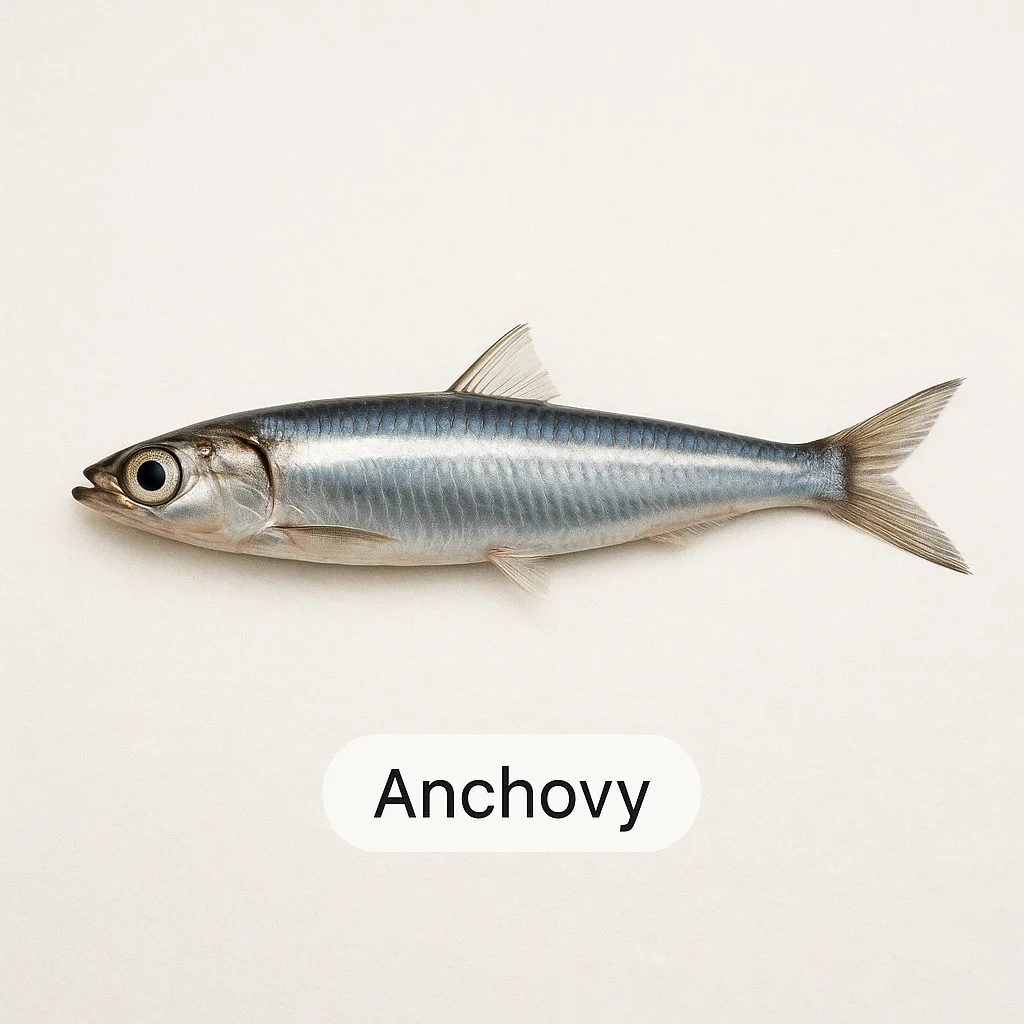
The appeal of anchovies lies not just in their distinct taste but also in their versatility in the kitchen. People enjoy them for their ability to enhance flavors, and they are often used in a preserved form to add character to dishes. Fresh anchovies are also a delicacy, offering a unique culinary experience for those willing to explore beyond the more familiar canned versions.
🐠 Taste & Texture
Anchovies are known for their bold and savory flavor profile. They possess a distinctive saltiness, which can add complexity and depth to dishes. The fish is generally oily, which contributes to its strong taste and smooth texture. The flesh is characterized by small, tender flakes and a soft mouthfeel. When fresh, anchovies emit a mild smell, which intensifies when preserved.
- Bold and savory with intense umami
- Distinctive saltiness with mild sweetness
- Oily texture with tender flakes
- Soft mouthfeel with a robust aroma
🌊 Origin & Habitat
Anchovies are typically found in coastal waters, thriving in both temperate and tropical regions. They are predominantly wild-caught, with minimal farming activities due to their migratory nature. Major harvesting regions include the Mediterranean Sea, the Black Sea, the North Atlantic, and the Pacific Ocean. These fish often form large schools, making them easier to catch in significant numbers.
📅 Best Season
The best season for anchovies varies by region, largely influenced by water temperatures and spawning cycles. In the Mediterranean, anchovies are generally caught from early spring to autumn. Seasonality is essential as it affects the fish's fat content and, consequently, its flavor and texture. For optimal taste, it's advisable to consume anchovies during these peak times when they are fresh and readily available.
🔪 Preparation
Proper preparation of anchovies involves a few essential steps. Begin by scaling the fish gently to avoid damaging the delicate flesh. Next, remove the head and guts by making an incision along the belly. Check for pin bones and extract them with tweezers if necessary. Rinse the fish briefly under cold water before cooking.
- Scale gently to preserve flesh
- Remove head and innards carefully
- Check and remove pin bones
- Rinse quickly under cold water
To manage the strong aroma of anchovies, consider soaking them in milk for a brief period or giving them a quick rinse with salt. These methods can help reduce the intensity without compromising the unique flavor.
❄️ Storage Tips
When storing anchovies, maintain freshness by refrigerating them promptly. They're best kept on ice and should be consumed within two days for optimal quality. Wrap them in an airtight container to prevent odor transfer. For longer storage, consider freezing the anchovies. Portion them appropriately, ensuring there's no air in the packaging to minimize freezer burn. Thaw them gradually in the refrigerator for best results.
- Do refrigerate promptly and consume within two days
- Do wrap in an airtight container
- Don't leave exposed to air for extended periods
- Don't refreeze after thawing
🍽️ Popular Dishes
Anchovies feature in numerous dishes across different cuisines, celebrated for their robust taste and versatility.
- Spanish Tapas: Fried anchovies in olive oil highlight their crispy texture and briny flavor.
- Caesar Salad: Adds a salty kick to the classic dressing.
- Pizza Napoletana: A traditional Italian pizza, where anchovies augment tomato sauce and cheese with umami.
- Bagna Cauda: An Italian hot dip, integrating anchovies with garlic and olive oil for a warm, savory experience.
- Pasta Puttanesca: Known for its tangy and piquant taste, anchovies shine alongside olives and capers.
- Fish Sauce: Anchovies are fermented into a potent liquid seasoning vital in Southeast Asian cuisines.
If considering raw or lightly cured anchovy dishes such as ceviche, ensure that the fish is sashimi-grade, as there are safety concerns with consuming raw seafood.
🥗 Nutritional Benefits
Anchovies are a nutritious inclusion to any diet, offering essential nutrients that support overall health. They are a good source of quality protein, providing necessary amino acids for body functions. Anchovies are also rich in omega-3 fatty acids, which may support heart health. Additionally, they supply vitamins like B12 and minerals such as calcium and selenium, contributing to wellbeing in various ways.
- High in protein with essential amino acids
- Contains omega-3 fatty acids
- Source of vitamin B12 for energy metabolism
- Rich in calcium for bone health
⚠️ Who Should Eat & Caution
While anchovies have numerous nutritional benefits, they may pose allergen risks to individuals sensitive to fish. Cross-contact can occur in kitchens, so care should be taken for those with allergies. Due to their small size and lower trophic level, anchovies typically have lower mercury levels, making them a safer seafood option for most people, including pregnant individuals and children. Nevertheless, it's essential to balance their intake and ensure seafood is properly cooked to minimize risks associated with raw or undercooked fish.
📌 Summary
In summary, anchovies are a prized seafood option, known for their robust taste and adaptability across various culinary traditions. When fresh, they offer a delightful and nourishing experience. As a versatile ingredient, they can enhance numerous dishes, from salads to pastas and beyond.
- Strong flavor that adds complexity to dishes
- Best consumed fresh or preserved properly
- Rich in essential nutrients such as omega-3
- Handle and store with care to maintain quality